


Vegetation Management
Keeping rights-of-way clear of trees and vegetation keeps everyone safe and reduces power outages.
Right of Way Guidelines
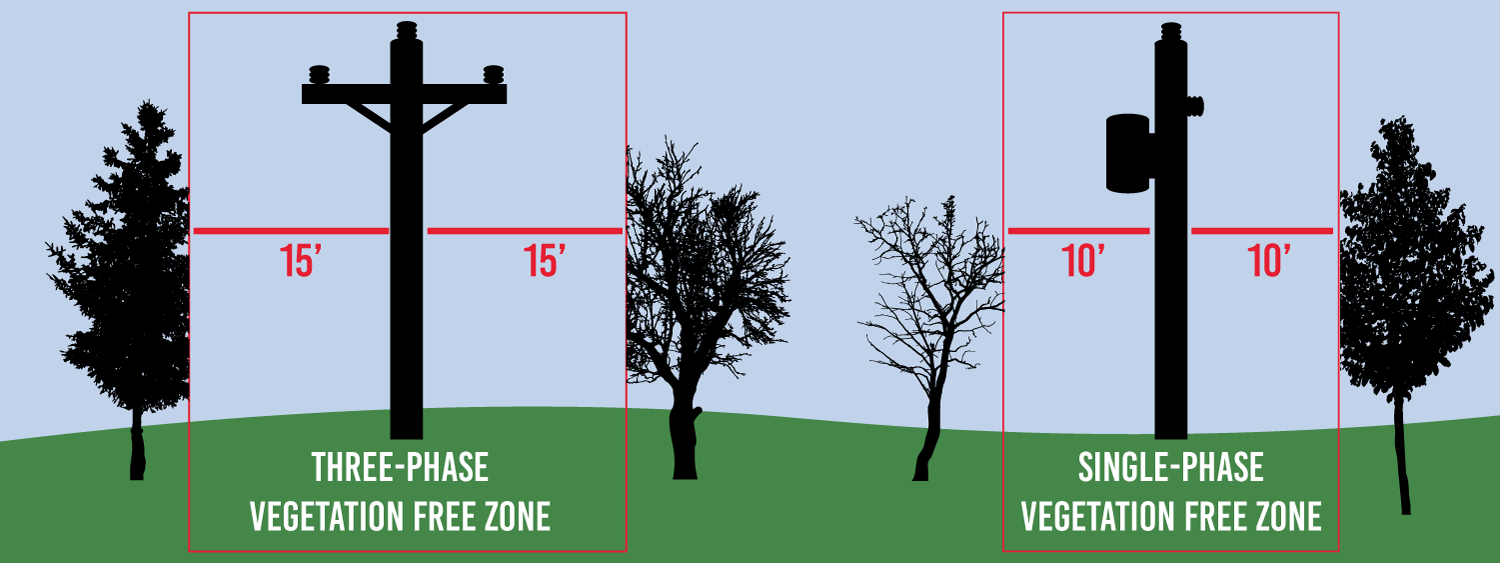
Central is committed to delivering safe, reliable electricity. To do so, it’s essential to keep power line rights-of-way clear. Trees or vegetation too close to lines can disrupt service and create safety risks. Regular maintenance, including clearing, pruning, mowing and herbicide use, helps protect our crews, the public and system reliability. Vegetation within 15 feet of the centerline for three-phase lines and 10 feet of the centerline for single-phase lines will be removed.
ROW Benefits
• Supports safe, reliable power delivery
• Reduces outages and protects the system
• Ensures regulatory compliance
• Promotes safe, efficient operations
Access to Property & Easements
By receiving service, members grant Central ongoing permission to access their property as needed to build, operate, inspect and maintain electric or telecommunications infrastructure. This includes allowing right-of-way easements and the cooperative’s right to clear and control all brush, vines, shrubs, trees and tree limbs situated within the power line right-of-way corridor utilizing mechanical methods and herbicide treatments.
The cooperative (and its contractors) must always have unobstructed access—including during emergencies—and may manage vegetation within utility corridors to keep service safe and reliable. Members are responsible for providing access through gates or other barriers (such as keys, codes, or locks).
Herbicide Application
Progressive Solutions LLC, a contractor working on behalf of Central Rural Electric Cooperative, is conducting vegetation management along power line rights-of-way. Licensed professionals will apply herbicides to control brush, trees and other vegetation that can interfere with power lines and cause outages. Treatments are applied selectively and generally limited to unmanaged areas where vegetation poses a risk to electric facilities. Maintained lawns, landscaped area and gardens are not treated. Herbicides are applied in small amounts according to all product label requirements and safety standards. This work is part of Central’s regular vegetation management program to help keep electric service safe and reliable for our members.
Notification of Right-of-Way Work
Central will inform members via email when crews will be in their area to perform right-of-way maintenance work. The notification will also include the name of the contract crew working on behalf of Central. If you're not receiving emails from Central, call 405-372-2884 and talk with an account representative, or update your email address in SmartHub.
 Plant the Right Tree in the Right Place
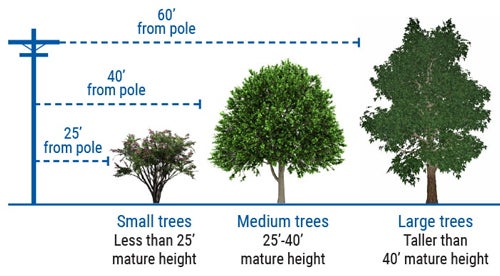
If you’ve planted trees, bushes, or plants directly under electric lines, they’re at risk of being removed. You can help protect your plants. Never allow trees, bushes, or plants of any size to grow directly under electric lines. Before planting, consider the mature size of the species you’ve selected. For example, a 4-foot-tall, 2-foot-wide tree planted today could end up 60 feet tall and 30 feet across when fully grown. Use this diagram as a reference when thinking about the right tree, the right place.
Call 811
If you're planning to dig in your yard, be sure to call 811 first – it's the law! Injury and power outages can occur when metal tools come into contact with buried electric lines. Other hazards like water and sewage, telecom, and oil and gas lines could also be buried underground. When you call 811, their staff will come to your location and mark all underground lines and equipment for free. You must contact them at least two working days in advance before you plan to dig.
 Planting near Pad-Mount Transformers
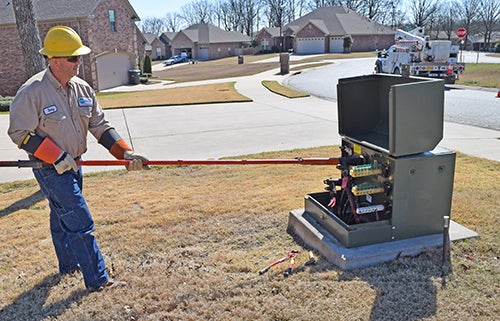
In areas with underground electric service, do not plant shrubs or other vegetation around pad-mounted transformers or otherwise hide or block access. Obstructions near this equipment will make maintenance work hazardous or difficult for crews and may increase outage restoration times. Ten feet of clearance is needed so crews can safely open and make needed repairs to pad-mount transformers.